Informations about kidney disease and diabetes, Any question Email me: kidneyfailurecn@hotmail.com
Showing posts with label Renal Failure. Show all posts
Thursday, April 18, 2013
The Common Sense of Renal Insufficiency
Renal Insufficiency, also called Renal Failure, is the final result of varieties of progressive kidney diseases. If the kidney diseases can not be brought under control, most of them will develop into Renal Insufficiency. Renal Insufficiency can be subdivided into Chronic Renal Insufficiency and Acute Renal Insufficiency. Acute Renal Insufficiency is often caused by shortage of blood supply in kidneys, renal obstruction or harm of toxin. In contrast, Chronic Renal Insufficiency occurs due to the long-term renal pathological change. As the disease develops, the renal function declines.
There are many causes which lead to Renal Insufficiency including Primary Glomerular Nephritis, Diabetic Nephropathy, Hypertensive Nephropathy, Renal Interstitial Tubular Nephropathy and PCK (Polycystic Kidney Disease) etc.
In the early stage of Renal Insufficiency, patients with Renal Insufficiency can not feel any symptoms and the only way to find out the renal abnormality is through test. So it is important to take a regular kidney test for people who may be likely to have kidney disease or have family history of kidney disease.
As the disease develops, the toxin in patients’ blood build up so that patients with Renal Insufficiency feel weak, easily get tired and lag in response. As the toxin in blood build up, patients may have symptoms of muscle and nerve system such as muscle weakness, crick and cramp. At this moment, there will be sting-like pain in four extremities and even some parts of body may feel numb. If the blood pressure in patients with Renal Insufficiency is too high and the toxin in blood builds up too much, it may lead to Brain Dysfunction.
Chronic Renal Insufficiency can lead to sexual failure. Statistics shows that about 90% of men with Uremia have problem with sex.
Once people have Renal Insufficiency, they have to treat it timely and effectively with active attitude. For patients with Renal Insufficiency, their kidneys are damaged which lead to the symptoms of Renal Insufficiency. To treat it effectively, we have to restore the damaged renal cells and protect the healthy renal cells. Micro-Chinese Medicine Osmotherapy can restore the damaged renal cells. At the same time, it can provide an easier environment for the further treatment—Immunotherapy. Immunotherapys have the strong self-renewing ability. It means that the Immunotherapy can regenerate a large amount of daughter cells which have the same characteristic as those original Immunotherapy. Then these daughter Immunotherapy can differentiate into renal functional cells to replace the necrotic renal cells. Therefore, the renal function can recover extremely to some extent. Of course, the curative effect depends on the illness condition.
Don't Miss :Lower High Creatinine in Renal Insufficiency
If your want to know more information about Renal Insufficiency and our treatment, please contact us online or send us an email at kidneyfailurecn@hotmail.com.We are glad to help you.
Monday, April 1, 2013
Why Creatinine Matters and What to Do about That
People with Renal Failure or ESRD live with high levels of creatinine. Elevated creatinine appears almost exclusively in people with the disease. Those patients are told that their creatinine level are dangerously high but don’t know what does that means or affects. If you are really a truth digger, then this may be the right article for you.
Creatinine is the metabolic product stemming from the muscle metabolism. It is excreted by kidneys exclusively, that’s why creatinine becomes the detection marker of kidney damages. A serum creatinine test can tell you how well your kidneys function, while a creatinine urine test measures the creatinine in your urine.
Ostensibly, the reason why creatinine would increase is due to malfunctioned kidneys failing to excrete urine. Substantially, it is caused by kidney fibrosis. The kidney fibrosis results from the occurrence of phenotype transformation as a result of damaged renal intrinsic cells. Fibroblasts change myofibroblasts on account of the stimulation of changes mentioned before. Meanwhile, healthy renal tissues are impaired and develop pathological changes. Consequently, Renal Failure appears in the end.
Due to the progressive damages of kidneys, one’s kidney function decreases accordingly. Of course, the excretory function declines and results in elevated creatinine. Moreover, other indexes such as serum creatinine and urea nitrogen rise too. High blood pressure and swelling attack in most of the patients with Renal Failure or kidney diseases.
After realizing how creatinine increases, you must want to know how to lower high levels of creatinine?
Some may already get the point that lowering the creatinine shouldn’t be the ultimate goal, compared with improving one’s kidney function, decreasing the high levels of creatinine should only be secondary. Because decreased kidney function or malfunctioned kidneys are the major culprits accounting for high levels of creatinine.
Friday, March 22, 2013
Why Diabetes would lead to Renal Failure
Diabetes becomes a worldwide health problem since over 20 million people in the United States are affected with this disease. Whatever type one or type 2 diabetes is a disease in which the body fails to produce sufficient insulin or can’t use the insulin properly. People with diabetes would suffer from high blood sugar and fatigue.
Diabetes can cause problems in many organs of your body, such as heart, liver, kidneys and so on. Among all those problems, Renal Failure is pretty common. But how does the diabetes affect one’s kidneys and finally lead to Renal Failure?
Diabetes mellitus affects small blood vessels in the whole body and then poses damages on them. Due to the impaired blood vessels, the blood flow to kidneys will probably decrease. And then ischemia and oxygen deficit occurs, resulting in the kidneys fail to work properly. The kidney problem causes a series of serious consequences, such as water and salt are retained and can’t be discharged from the blood, swelling appears, protein leaks, and toxins building up in human body.
Another reason for Renal Failure induced by diabetes is that the disease may cause urination difficulty. This is a sign of nerve damage. Long-term full bladder has nothing good to your kidneys and is prone to develop urinary tract infection.
Evidence-based statistics from NKF reveals that around 30% of patients with Type 1 diabetes and 10-40% of Type 2 patients would progress to Renal Failure in the end. Scary isn’t it?
One thing you need to know is that no matter what kind of kidney disease, they get a chance to progress to Renal Failure sooner or later if left untreated or poorly controlled. To those with high blood pressure, diabetes, nephritis, or some other kidney disease, please keep an eye open for your illness condition.
Sunday, March 17, 2013
Fatigue Can Be the Spell of Renal Failure
Some of the people with Renal Failure would complain their fatigue all day long and frequent urination at night making the sleep a problem. However, you can’t tell if you have Renal Failure or other kidney disease with only this symptom. So, how can you tell if you really get Renal Failure?
Renal Failure describes a medical condition that your kidneys fail to filter properly. The kidney function can be lost in a rapid speed or a slow progression. The former one is called Acute Renal Failure while the later called Chronic Renal Failure. Major difference between those two diseases is the speed of onset.
To be honest, Renal Failure doesn’t point to the site of the problem. Fatigue and muscle cramps are the two major signs or symptoms of Renal Failure.
Fatigue appears early when one suffer from the disease. It is one of the most common symptoms signaling you may have the disease and need serious attention immediately. By the following symptoms, one may tell if he or she have already developed Renal Failure. All those symptoms focus on the fatigue only with more detailed descriptions:
Fell tired like forever
Lack of energy as well as your vigor
Feel tired especially at the end of the day
The tiredness is overwhelming only after mild activity
When Renal Failure develops, the kidneys fail to function properly resulting in the insufficient production of erythropoietin. That’s why anemia occurs and then the constant tiredness is experienced.
Due to the crazy tempo of life in cities, people often experience fatigue and weakness from time to time, it is especially true in those who are in a spin all day long. Men or women, will experience weakness and lose their sensation of well-being due to the busy work as well as sleep deficit. Therefore, the long-standing fatigue is overlooked by most people. They have no idea their kidneys are asking for help for so long by sending this signal.
Saturday, March 9, 2013
Preparing for Hemodialysis
When Chronic Kidney Disease develops to Stage IV (which is also known as End-stage Renal Failure) along with GFR﹤30 cc/min, dialysis turn to an inevitable choice. Dialysis can be mainly divided into hemodialysis and peritoneal dialysis. The key to a successful hemodialysis depends upon awareness and preparation. So what should we do before we perform hemodialysis?
a) Certain tests should be run before receiving hemodialysis
Those tests include heart check, vaccination status, dialysis access and some others. By detecting the heart condition in advance, the doctor could recommend you a better dialysis type, for example, those with diabetes or high blood pressure may suffer from a weak heart than others, to those kinds of people, hemodialysis is their first choice. Usually, the doctor will suggest you a peritoneal dialysis instead of the former one.
b) Control your blood pressure
High blood pressure itself can damage kidney function. Taking good control of your blood pressure contributes to your kidneys especially during Chronic Kidney Failure or ESRD. Having a good control over your high blood pressure would effectively slow down the progression of Chronic Kidney Failure as well as reduce the incidence of cardiovascular complications. Besides, ultrafiltration and sodium discharge of dialysis have a confirming function of depressing high blood pressure.
c) Psychoneself
Doctor has the responsibility to help patients get ready for hemodialysis. However, mental preparation in advance really matters, because it can not only help patients deal with the fact that he/she needs hemodialysis without delay, but also spare time getting down to vascular access.
d) Dialyser examination in advance is necessary
To check whether the package rupture or not, and whether dialyiser disrepair or not, instruction of the new dialyser should be read before usage. Realize about disinfection methods, material of membrane, pre-congestion amount, ultrafiltration rate, maximum tolerant pressure, clearance rate of small molecules and moderate molecular and remaining blood volume etc.
Friday, March 8, 2013
Signs and Symptoms of CKD
CKD (Chronic Kidney Disease) or Chronic Renal Insufficiency describes a progressive loss of the kidney function over time. Chronic Kidney Disease is classified as five major stages in line with GFR.
In stage one and two, one’s kidney function is normal or mild damaged, no obvious signs or symptoms form. Only the GFR (glomerular filtration rate) reduces. In stage 1, GFR is no less than 90% while the GFR reports as 60 to 89% in stage 2. It is 30-59% as the medical condition progresses to stage 3. Additionally, signs and symptoms occur accordingly. Just for your information, the symptoms won’t appear until no more than 50% of kidney function is impaired. More serious and significant signs and symptoms show up when GFR declines to 15-29% or even less than 15%. This is the last two stages of CKD, namely, Chronic Renal Failure and End-stage Renal Failure.
Common signs and symptoms of CKD:
Due to the kidney function has not been affected yet in the first two stages, no or few physical symptoms appear. Serum creatinie may begin to elevate or stay normal during this period and indicates that half of your kidney function is lost.
In stage 3 to 4, the serum creatinine probably increases as a result of kidney injury. Besides, fatigue and weakness occur, puffiness is obvious in hands, feet, ankles and eyelids. Usually, kidney disease patients experience back pain or flank pain from time to time. The changes in urine may be the most common symptom of kidney injury. It can be increased urine output, the changes in color, and the frequency etc. in some cases of kidney disease, foamy urine develops.
Stage 5 of Chronic Kidney Insufficiency, also called End-stage Renal Failure (ESRF), is the most serious illness condition of kidney disease. The medical condition has no chance to reverse as progresses to ESRF. Dialysis and kidney transplant become the few left options for ESRF patients. Signs and symptoms of ESRF are fatigue, headache, muscle cramps, nausea, vomiting, lower metal sharpness, night-time urination, itching, decreased sex drive, high blood pressure, shortness of breath, chest pain, loss of appetite etc.
Tuesday, March 5, 2013
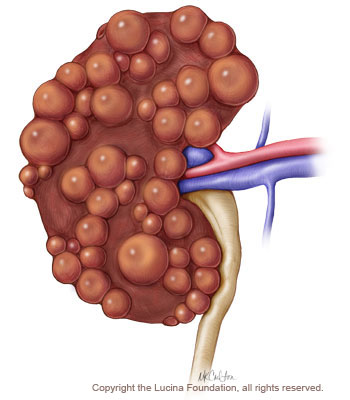
Why PKD Cause Renal Failure
PKD (Polycystic Kidney Disease) can’t be cured, it just can be controlled and treated to stop it progression to Renal Failure.
How PKD lead to Renal Failure?
The cysts in kidneys are relatively small. Symptoms normally appear after the age of 30. Before the onset developing, the disease progresses in a rather slow speed. However, PKD progresses over time not only in size, but also in number. Increasing cysts grow and pressure the surrounding tissues or organs, causing serious problems. The kidney function would deteriorate progressively and finally lead to Renal Failure or even End-stage Renal Failure. During the process, one’s kidney function declines sharply. PKD patients have to receive dialysis or kidney transplantation in the end.
Since we have already known the relationship of PKD and Renal Failure, how to prevent it from happening?
Early diagnosis
If you have a family history, you should keep an eye open for your condition. regular check-ups benefits. Ultrasonic, CT, MRI and other tests contribute to the diagnosis of the disease. Serum creatinine along with urea nitrogen is the two common indexes signal the kidney function.
Take good care of yourself in daily life
Diet and daily proper daily exercises are definitely good for the physical condition with PKD. (Wanna know the inducing factors of Polycystic Renal Disease? Consult our doctor on line!)
Timely treatment
The current treatments are kidney replacements, i.e. dialysis and kidney transplantation.
Our featured therapies such as Immunotherapy therapy and Micro-Chinese Medicine Osmotherapy
The progression of PKD different from person to person, about one in three people with ADPKD get to the age of 70 without any serious Renal Failrue.
Monday, March 4, 2013
What Should I Do If I Experience a High Level of Potassium
High levels of potassium, also called hyperkalemia. It usually appears as one
suffers from Acute Renal Failure or happens in people on dialysis. Hyperkalemia
refers to the kalemia level higher than 6mmol/L, it can cause arrhythmia or even
death.
Why would that happen?
Potassium is usually excreted by kidneys. They struggle to process fluids, electrolytes and wastes even in their best days, let alone those who have already suffered from Renal Failure and their kidney function has been impaired greatly.
Some of the potassium comes from our daily diet. Normally speaking, healthy kidneys excrete more kalium as you take foods high in the mineral; if you eat less, then excrete less. One thing you need to remember is that even you don’t take any foods containing kalium, your kidneys still excrete the kalium.
Patients with Renal Failure can’t remove the mineral from the blood anymore because of their impaired kidney function, which explains why the kalemia soars.
What are the common symptoms of kalemia?
Weakness of limbs, numb tongues, arrhythmia or even cardiac arrest as a result of high levels of potassium. Whatever those with dialysis or develop Renal Failure, limiting the potassium intake is always a wise choice.
How to avoid from what we eat?
You can stay away from foods high in potassium, such as chocolate, cocoa, coffee, tea, sport beverage, bananas, loquat, oranges, carambola, tomato, potato, mushroom, agaric, carrot, cabbage, spinach, kelp, sodium salt and so on and so forth.
Learn to read labels on the packages, it is right there. This is also one way to avoid food high in kalium.
Why would that happen?
Potassium is usually excreted by kidneys. They struggle to process fluids, electrolytes and wastes even in their best days, let alone those who have already suffered from Renal Failure and their kidney function has been impaired greatly.
Some of the potassium comes from our daily diet. Normally speaking, healthy kidneys excrete more kalium as you take foods high in the mineral; if you eat less, then excrete less. One thing you need to remember is that even you don’t take any foods containing kalium, your kidneys still excrete the kalium.
Patients with Renal Failure can’t remove the mineral from the blood anymore because of their impaired kidney function, which explains why the kalemia soars.
What are the common symptoms of kalemia?
Weakness of limbs, numb tongues, arrhythmia or even cardiac arrest as a result of high levels of potassium. Whatever those with dialysis or develop Renal Failure, limiting the potassium intake is always a wise choice.
How to avoid from what we eat?
You can stay away from foods high in potassium, such as chocolate, cocoa, coffee, tea, sport beverage, bananas, loquat, oranges, carambola, tomato, potato, mushroom, agaric, carrot, cabbage, spinach, kelp, sodium salt and so on and so forth.
Learn to read labels on the packages, it is right there. This is also one way to avoid food high in kalium.
Sunday, March 3, 2013
Top 5 Foods Recommended for Patients with Renal Failure
Prevention Renal Failure is way much better than treatment, you may say of course I know that, but how much do you know the importance and really carry out in your daily life? Or if the patient is a kid who is unwillingly to eat those foods, then what should you do about that?
Anyway, first things first, you should admit the fact that by eating right food, it could help you prevent from the harassment from Renal Failure, or, the diet means a lot to your illness condition if you have already got the disease.
Here are top five foods which are good for your kidney health.
No. 1—onion
Onion is a kidney-friendly food attributing to its quercetin. The chemicals in onion are able to prevent the fatty material from depositing in one’s blood vessels, protect one’s heart and anti-inflammation. If you or your cared one is a Renal Failure patient, don't forget to try onion.
No.2—apple
“An apple a day keeps the doctor away”, the old saying still works today. Apples is characterized as anti-inflammation and reduce cholesterol etc. apples can be eaten raw or cooked, or if your kid doesn’t like eating apple, then give him or her apple juice.
No.3—berries
Berries are known as kidney-friendly food for a really long time. Those berries include blueberry, strawberry, blackberry, cranberry, and raspberry and so on and so forth. Various berries obtain different features, but all in all, those fruits are good for the bone, heart, or anti-inflammation etc.
No. 4—egg white
Please notice that it is white egg instead of egg yolk. When I was little, I hated eating eggs, both egg white and yolk, because I was always choked by it. I assume same thing may happen in kids now. One thing you may not know is that egg white is pure protein, can you believe that? It provides us the highest quality protein.
No. 5—cauliflower
This is a super food for Renal Failure patients. Not just because it contains fiber and folate, but also rich in vitamin C. moreover, you can eat it with many types, such as smash, steamed or boiled, whatever you or the kids like.
Those tips are just for those who concern their kidney health and who have already suffered from Renal Failure or some kind of kidney disease.
Nine Steps about How ESRF Happens
Several reasons trigger ESRF (End-stage Renal Failure), one of the major culprits is fibrosis. It is a fatal disease and would leave the patients in dangerous situation. However, the disease has some certain steps. By knowing the steps, we can detect the disease in early stage. Nine steps are:
1. Partial microcirculatory disturbance of damaged kidneys results from a variety of pathological damages (primary or secondary damages) incurs ischemia and oxygen deficit of kidney tissues.
2. Ischemia and oxygen deficit impair your vascular endothelial cells in kidneys.
3. Once the endothelial cells in kidney capillary vessels have been damaged, attracting the infiltration of inflammatory cells in blood circulation, in the meantime, morbigenous inflammatory mediators (IL-1 and TNF-α etc.) are released, which triggers the renal fibrosis. The pathological damages are responsible for the inflammation response of damaged kidney.
Local pathological changes of glomerulus would appear for the time being: Mesangial cell proliferation, mesangial matrix increasing.
Changes in glomerular basement membrane: filtered holes enlarge or shut; glomerular basement membrane ruptures; electrostatic barrier damages; permeability of kidneys strengthens.
Consequently, proteinuria and hematuria appear in clinic during this time, glomerulus would gradually progress to fibrosis and hardening afterwards.
4. Once renal fibrosis has been triggered, a series of cell factors and growth factors (PDGF and TGF-β) of renal toxicity are produced and released successively.
5. Those factors with renal toxicity would incur phenotype transdifferentiation of kidney functional cells (mesangial cells, epithelial cells and mechanocyte).
6. Phenotype of mechanocyte especially those in renal interstitium have been transformed, and then a series of uneasy degraded collagen fibrins (extracellular matrix--ECM) have been secreted and synthesized.
7. Owing to the increasing secretion of ECM, dynamic equilibrium mechanism fails to maintain the synthesis and degradation of ECM in kidneys, which is responsible for the reduction of synthesis and decrease of degradation to extracellular matrix in the kidneys, leading to a great amount of extracellular matrix to deposit and gather.
8. Owing to abundant deposition and aggragation of extracellular matrix, collective ECM replace the healthy functional nephrons accordingly, which results in the continuous hardening of glomerulus along with interstitial fibrosis as well as renal vascular fibrosis of renal tubulus.
9. The progressive fibrosis of kidneys causes functional nephrons decreasing, together with the persistent loss of renal function, consequently, fibrosis progresses to cicatrical tissues in the long run. Under this condition, End-stage Renal Failure--end-stage renal failure occurs eventually as functional nephrons are impaired completely and lost their function.
Saturday, March 2, 2013
What to Eat When Taking Dialysis
Dialysis acts as an artificial kidney to remove metabolic wastes from your blood. It also changes everything especially your dietary habit. Food gives you energy and places a great influence to your condition. The wastes come from what you eat, that’s why Renal Failure patients should follow a restricted diet.
Dialysis diet should restrict the intake of potassium, sodium, phosphorus and others. Moreover, the diet should be changed according to Renal Failure patients' weight, blood test results and other reasons.
Eat a variety of foods and try to avoid taking same foods for a long time.
Ask your dietitian about your diet plan.
Avoid salty food so as to reduce the intake of fluid.
Potassium level rises when dialysis is performed, so my suggestion is to stay away foods high in potassium.
High potassium foods include banana, kiwi, cooked celery, tomato sauce and others.
Take right amount of phosphorus. High phosphorus in your blood will pull calcium from bones resulting in the weak bones. Too much phosphorus will make your skin itching.
Foods high in phosphorus include milk, cheese, colas and nuts etc.
High-protein diet should be followed.
Patients with Renal Failure doctor or dietitian probably encourages you to eat as much as high quality protein. The reason is that protein helps you repair your tissues. It also delivers you a better immunity to fight against infection or other diseases.
Meat, fish, eggs are good sources of high-quality protein.
Don’t take too much sodium because it would make you thirsty. Sodium is often found in salt. Taking too much sodium in a long time would trigger heart failure and high blood pressure.
Foods contain less sodium are fresh vegetables while high sodium foods include dill pickle, mustard, soy sauce, ketchup and so on.
Do not take vitamin or minerals. Your doctor will prescribe you mineral supplement. You’d better not buy them by yourself because over-the-counter vitamin or minerals can be harmful.
So many things you should remember to cooperate with your doctor when performing your dialysis. It can be hard for you, but you should stick to dietary restrictions.
Overview of Renal Failure
Renal Failure refers to kidney damages caused by various reasons, which leads to the loss of filtering ability in nephrons. When your kidneys lose their normal function, they can no longer balance fluids and electrolytes as well as metabolic products in human body, which responsible for high blood pressure, metabolic acidosis or uremia syndrome. All in all, Renal Failure describes a pathological condition that your kidneys partially or completely lose their function. According to the speed of its onset, Renal Failure can be divided into two types: Chronic and Acute Renal Failure.
Chronic Renal Failure
Chronic Renal Failure formally called Chronic Kidney Injury. According to its assessment of kidney function, Chronic Renal Failure can be explained in two aspects—general and narrow concepts. Chronic Renal Failure is caused by a variety of chronic kidney diseases in general concept. Various kidney diseases diminish the functions of excretion and secretion as well as regulatory ability, and cause the imbalance of water and electrolytes, all those cause azotemia.
In other words, the renal insufficiency in the whole compensated stage can be collectively called Chronic Renal Failure. On the other hand, narrow concept of Chronic Renal Failure refers to serum creatinine≥442μmol/L in compensated stage of chronic renal insufficiency.
Acute Renal Failure
Acute Renal Failure is also called acute uremia. Acute Renal Failure is a group of syndromes caused by renal or extrarenal pathological changes which is responsible for the sudden decline of metabolic products excreted by kidneys, abilities to balance water, electrolytes and acid-base.
Causes of Acute Renal Failure:
1) Prerenal oliguria, i.e. serious shortage in effective blood volume
2) Renal oliguria
Renal Oliguria occurs in severe glomerulonephritis, aminoglycoside antibiotics, serious systemic infections, hemolysis and biotoxins etc.
3) Postrenal oliguria
It occurs in acute urinary tract obstruction.
Clinical symptoms:
1) Oliguric or anuric phase
2) Phase of diuresis
3) Recovery phase
Our approach for Renal Failure—Immunotherapy
There are six steps of Immunotherapy.
Step No.1 Provides an accurate and comprehensive diagnosis for the disease.
Step No.2 Adopts brand-new medicines
Step No.3 Immune tolerance stage
Help your kidneys accept the fact that immune complexes deposit in the kidneys aiming to prevent the reoccurrence of immoderate inflammatory reaction which is called immune tolerance.
Step No.4 Immune-regulation phase in which give patients immune-regulation treatment.
Step No.5 Immune protection stage
Step No.6 Immune clearance
Friday, March 1, 2013
An Introduction of Immune System
Immune system is vital to one’s health. In order to know how it works, I write this article for all of you. Hope can help you.
What is immune system?
The immune system is a whole network of cells, tissues and organs, they work together to defend the foreign invaders. Those cells are involved in white blood cells, or leukocytes and so on. They focus on protecting your body from being attacked by millions of virus, bacteria, germs, toxins and parasites. Before knowing how it works, you should know what would happen if you lose it first.
When the living beings die,the system will stop working. What the consequences? The body will be invaded by the bacteria, germs and parasites after the system terminate their activities.
However, all those bad things can’t intrude as the system works normally. The consequences of invasive things, the body will be collapsed completely until nothing’s left. This is the purpose of our system.
Our immune system is complicated as well as interesting. It works day and night and being overlooked in most of time by most of us. One condition can draw our attention, that is, we will notice the abnormality of your system as it is disturbed. For example, when your finger is cut and then various viruses and germs access into your body, after that, it responds to that and heals your finger all by itself. Sometimes, the system will make mistakes, triggering the inflammation of the wound. Pustule and inflammation are all the side-effects coming from it.
The immune system will bring troubles as it fail to function. The consequences are various diseases. This is called autoimmune disorder. Normally speaking, the allergy is kind of over-reactive reactions. One more example, diabetes is caused by abnormal immunity and it attacks and destroys pancreas cells.
More often than that, this system will hold back some of our actions which is beneficial for us. For example, organ transplant is much harder than we thought, this is just because our own immune system resist the transplantation.
Why Renal Failure Patients Often Develop Puffiness
Puffiness or swelling is often associated with Renal Failure. It occurs when the body retains excessive fluid. This condition is medically called edema. It is often close related with Renal Failure or some other kidney diseases, puffiness acts as one of early signals of the disease.
Swelling can happen anywhere. However, the most common areas are ankles, feet, legs, face, chest and arms. It is caused by the leakage of fluid from small blood vessels. Aiming at this problem, one’s kidneys would retain water and sodium in the body. And then the small blood vessels release more fluid to the body, causing vicious cycles and makes fluid trap in the tissues. All those are responsible for the puffiness.
The puffiness can be caused by the following reasons:
▪ Nephrotic Syndrome
As one develops Nephrotic Syndrome, he or she would experience edema. This is caused by reduced urine protein. After low protein levels appear, the kidneys will retain more salt to build blood volume. As the result of this, excess fluid will be stored in tissues and causing swelling.
▪ Heart failure
Heart failure is defined as the heart fail to pump enough blood to meet the body’s needs. It can be caused by many reasons, such as heart diseases, high blood pressure or coronary artery disease etc. when the heart fail to work efficiently, the puffiness would appear.
▪ Hypernatremia
Hypernatremia, as the name denotes, is induced by increased concentration of sodium in the blood. Sodium is vital to the function of muscles and nerves in human body. But too much sodium causes systemic puffiness and reduced urine output.
Swelling is often involved in Renal Failure, and acts as one of the earliest symptoms of kidney disease. Compared with blood in urine, it is much easy to recognize. I sincerely suggest those who experience edema, you’d better talk with your doctor immediately. Of course, puffiness doesn’t always occur as the sign of Renal Failure, but you can never to be too careful. Isn’t it?
Thursday, February 28, 2013
Dietary Treatments to Fight against Renal Failure
Diet acts an important part in human life. It is especially vital to those who suffered from some kind of disease, say, kidney diseases or Renal Failure. A kidney-friendly diet benefits the patients’ condition and therapeutic effects, while a bad one contributes to the aggravation and progression of the disease. If you have some kind of kidney disease or Renal Failure, this is the right article for you and your cared ones.
What about the protein?
Protein is good, but only for those with healthy physical condition. If you develop Renal Failure or kidney disease, you’d better take care of your protein consumption in daily life. High quality protein is recommended. To be more specific, 0.6g/kg of body weight in every single day is the upper limit. Vegetable protein is not always better than animal protein, high quality protein food is the best choice, such as fish, lean.
How do I take trace elements?
Those trace elements include: sodium (Na), potassium, phosphorus, calcium and so on.
Patients with Renal Failure have electrolytes disorders, as a result of chaotic electrolytes, various complications and annoying symptoms are triggered. That’s why Renal Failure patients shouldn’t grab what they want because the already serious condition.
Here’s an approximate list containing the common foods they should avoid:
High levels of sodium foods: salt, frozen meats (all types), corned beef, pepperoni, pizza, sausage, Chinese Food, fast foods, cheese, pickles, soy sauce, potato chips, canned soups (all types).
Foods high in potassium: bananas, milk, prunes, orange juice, tomato juice, tomato sauce, all types of beans, nuts, chocolate etc.
Foods high in phosphorus: milk (any kind), chocolate, nuts, liver, cheese, black eye peas, yogurt, to name a few.
Modify your eating habits if you have a wrong one, while carry out your right one to boost kidney function and take well-controlled illness condition. I won’t list all the trace elements foods here, ask our online experts or talk with your doctor about this is the best way to help you stay away from any other possible troubles or life-threatening consequences.
Tuesday, February 26, 2013
Know about Renal Atrophy
Renal Atrophy is a medical condition describing the shrinkage of one or both kidneys. Renal Atrophy happens when there is a poor blood circulation or loss of nephrons. It is associated with the most serious consequences called Renal Failure.
What cause atrophic kidneys?
As the Renal Atrophy occurs, you need to think about if it is caused by congenital renal dysplasia, kidney disease or urinary tract obstruction. Ischemia, reflux nephropathy and acute pyelonephritis etc. could also impair the kidney functions in some way.
What is the relation between Renal Atrophy and Renal Failure?
Although Renal Failure and Renal Atrophy is not the same thing, Renal Atrophy may lead to Renal Failure somehow.
Renal Failure refers to the abnormal function of kidneys, which results in wastes accumulating in human body and cannot be discharged. Plenty of causes can trigger abnormal function, some of the causes lead to Acute Renal Failure while some cause Chronic Renal Failure.
Renal Atrophy is an anatomical term, which means the size-reduction of your kidneys. When Renal Atrophy occurs, glomerulus and renal tubulus has been damaged partially or completely.
How to diagnose and treat Renal Atrophy?
Before approaching a reasonable treatment plan, we need to find out the underlying causes of your Renal Atrophy. CT scan and MRI can surely help diagnose the condition. What kind of treatment we choose mainly depends on the extent of your kidney damages. Dialysis would be involved if one is suffering from Renal Failure.
Our approach for Renal Atrophy
We adopt Micro-Chinese Medicine Osmotherapy to treat the Renal Atrophy from progressing to a worse condition. Through a great amount of clinical practices, Micro-Chinese Medicine Osmotherapy is proved to be effective on remedying Renal Atrophy.
It can repair damaged intrinsic cells along with recover renal tissues as well as restore impaired kidney functions. In addition, Immunotherapy also aids in the treatment of Renal Atrophy and made a great progress in remedying the disease.
What you can do to prevent your kidneys from being atrophy?
You must make certain changes in your life-style including:
Avoid too much alcohol or soda pop
Drink appropriate amount of water instead of too much on a daily basis.
Excessive consumption of tobacco should be cut down for your own good, because tobacco would impair your kidneys and lead to kidney diseases.
Why Swelling Occur in Patients with Renal Failure
In most cases, swelling is caused by excess fluid accumulating in your body. It can be widespread or localized. The root cause is that your kidneys don’t work well or completely lose their function. Swelling in legs, ankles, face, feet or hands are the most common areas.
There are two major reasons causing swelling--heavy loss of protein in your urine and damaged renal function.
Heavy loss of protein in your urine: loss of protein over 3.0 grams per day.
When Renal Failure occurs, your kidney function becomes abnormal. With the aid of protein, blood volume can be maintained. When Renal Failure happens, the fluid in your blood vessel reduced, under such condition, the kidneys would signal that there is short of blood volume which would result in the fluid get into interstitial spaces. Consequently, swelling appears.
The key point to treat swelling is to reduce the loss of protein. In addition, low salt diet should be recommended for patients with Renal Failure.
Damaged renal function
Kidneys are unable to excrete sodium into your urine and cause swelling. Swelling in this situation can be triggered by taking excessive sodium from your daily diets. Patients with Renal Failure may require dialysis in the serious cases. Because the kidneys is unable to regulate electrolytes balance, that’s why we adopt dialysis. Dialysis is an artificial kidney; it can function as your kidneys when the real fail to work. Patients with Renal Failure whose renal function declines to less than 5%-10% require dialysis.
Patients with Renal Failure should limit the water intake, because excess water will aggravate the severity of your swelling. In addition, the kidney function has already been impaired, excessive water imposes heavy burden to your kidneys, making the condition much more serious whereas.
When Renal Failure occurs, there are so many things need to pay attention. To keep away from various complications, healthy lifestyle should be maintained. Only in this way won’t the condition get worsen.
Monday, February 25, 2013
Common Symptoms When Uronephrosis Occurs after Renal Failure
As one of the common symptoms of Renal Failure, people with uronephrosis often feel pain, difficult urination and will affect renal function sooner or later. That’s why we suggest early detection and treatment should be taken, so as not to delay the condition. Because the later you take treatment, the more severe damage it will made.
What exactly is uronephrosis?
Urinary obstruction leads to pyelectasis and caliectasis, which results in the retention of urine, this is called uronephrosis.
Symtoms caused by uronephrosis are:
1. Severe pain.
People with uronephrosis usually accompanies with severe pain, normally in back and lower abdomen.
The kidneys have been obstructed causing severe wrench, bursting or dull pain. For example, urinary tract calculi can cause uronephrosis with a severe renal colic while no symptom appears as uronephrosis caused by urologic neoplasms.
2. Frequent urge to urinate and urgent urination
People with Renal Failure can develop urinary tract infections. Quite a lot of people have been detected of uronephrosis when they go for a urinary tract check.
3. Uronephrosis can be detected when taking exam of uronephrosis
Part of the symptoms would appear only when exam of uronephrosis is taken. Uronephrosis is usually caused by urinary obstruction with no obvious signs or symptoms, which is related to the cause and its forming speed. Generally speaking, uronephrosis is often detected being done for another condition.
If the uronephrosis lasts for a long time, enlargement would appear, along with decreased renal function. As the condition progresses, renal failure will develop eventually.
Although uronephrosis sometimes cause no or mild symptoms, it can impact greatly to your kidneys and if left untreated, it would lead to renal failure in the long run.
Sunday, February 24, 2013
Diagnostic Tests for Renal Failure
The tests for Renal Failure in Kidney Disease Hospital mainly consist of two parts: the standard tests and our special tests. The routine tests or called standard tests, which can be done almost in any general hospitals. However, our featured tests or called special tests do make us different from other hospitals.
Our special tests can help us pinpoint the exact deposited location of immune complex and also the severity degree. By doing these tests, where are the damages and how serious the damages are can be told. By doing the tests, the clinical prescription and treatment can be instructed, which lays a solid foundation for a possible best outcomes.
Routine tests of Renal Failure
Blood tests
Serum creatinine: increased serum creatinine is usually an early signal of impaired kidney function and reports some kind of kidney disease.
BUN (blood urea nitrogen): often works as the index of GFR and the standard to tell if the dialysis is adequate or not.
Blood electrolyte tests: calcium, potassium, phosphorus etc. should be measured to see if electrolyte imbalances exist in your body, and of course, take necessary treatments according to the lab result.
CBC (Complete blood count): CBC denotes one’s situation of blood red cells, white blood cells and platelets.
Routine urine tests
Urinalysis: through examine the sediment in your urine; the renal damage severity can be estimated accordingly.
24-hour urine collection: helps monitor fluid balance
Imaging tests include abdominal ultrasound, CT scan, X-ray, MRI (magnetic resonance imaging)
Renal biopsy: analyzing a small section of kidney tissue could reveal the severity of kidney damages.
Our Special Tests—Eight Tests for Renal Injury
Total protein in urine: there are many protein ingredients in total protein in urine, concentration and component vary from time to time under normal or pathologic condition.
MAU (Micro-albumin in urine): MAU refers to micro-albumin in your urine, which is more sensitive than total protein, and can be used to monitor the very early damages of kidneys
Urine IgG (immunoglobulin G): if IgG deposit is closely associated with the damage of basilar membrane
Urine α1 microglobulin: early signal of renal tubulus damages
Osmotic pressure: it mainly reflects the function of concentration and dilution in renal tubulus
Urine total creatinine
GGT (gamma-glutamyl transpeptidase)
NAG (Amino-glucosidase): NAG is sensitive to the activity damages of renal tubulus
Saturday, February 23, 2013
Is It Okay for Renal Failure Patients Have Coffee
Coffee is popular in most of the regions around the world. It becomes an indispensable part in people’s lives. Someone loves it while others against it. However, it is believed that coffee or caffeine is the major culprit of sleeplessness, high blood pressure, diabetes or even Renal Failure in recent years.
Is it true? Can too much coffee impair one’s kidneys and trigger the Renal Failure?
Renal Failure describes a serious medical condition in which one’s kidneys fail to eliminate toxins or other stuffs from one’s blood and body.
Coffee is loaded with potassium, which exactly is strictly limited in people with the disease. What we fear most is that the high level of potassium coming from coffee triggers serious consequences.
Coffee is composed with caffeine, which is excreted by liver or kidneys. If one has already suffered from the diseaseor impaired kidneys, then drinking coffee will pose a heavier burden to his impaired kidneys. Undoubtedly, it has no good to the kidneys and illness condition. Besides,
caffeine contributes to obesity and increases in cholesterol levels or proteinuria.
This rule doesn’t apply to all the people. To those who have a good physical condition and are born with strong kidneys, the risk of developing kidney diseases depends. In other word, they develop a lower risk of suffering from Renal Failure. While for those with weak kidneys or in poor physical condition, coffee or caffeine definitely won’t help.
In conclusion, no evidence reveals that there’s some certain connection between Renal Failure and coffee. So any statements declaring the absolute ban or agreement towards Renal Failure or coffee are not right and should be doubted.
One thing you need to know is, different kidney diseases have different rules towards coffee-drinking. For example, people with PKD (polycystic kidney disease) are still allowed to consume coffee but with a limited amount. While for kidney stones, there are two opposite opinions, one opinion is in favor of coffee is able to lower the risk of developing a kidney stone, while the other think that coffee should be blamed for kidney stones.
Subscribe to:
Posts (Atom)


.jpg)